Digitizing Expert Knowledge in Manufacturing, Logistics, and Automotive
Critical shop-floor knowledge often leaves when experienced workers retire. Learn how to capture tacit judgment from manufacturing, logistics, and automotive teams and turn it into searchable, actionable guidance.
By
Tenten AI Delivery Team
Industry Delivery
Published
Read time
6 min
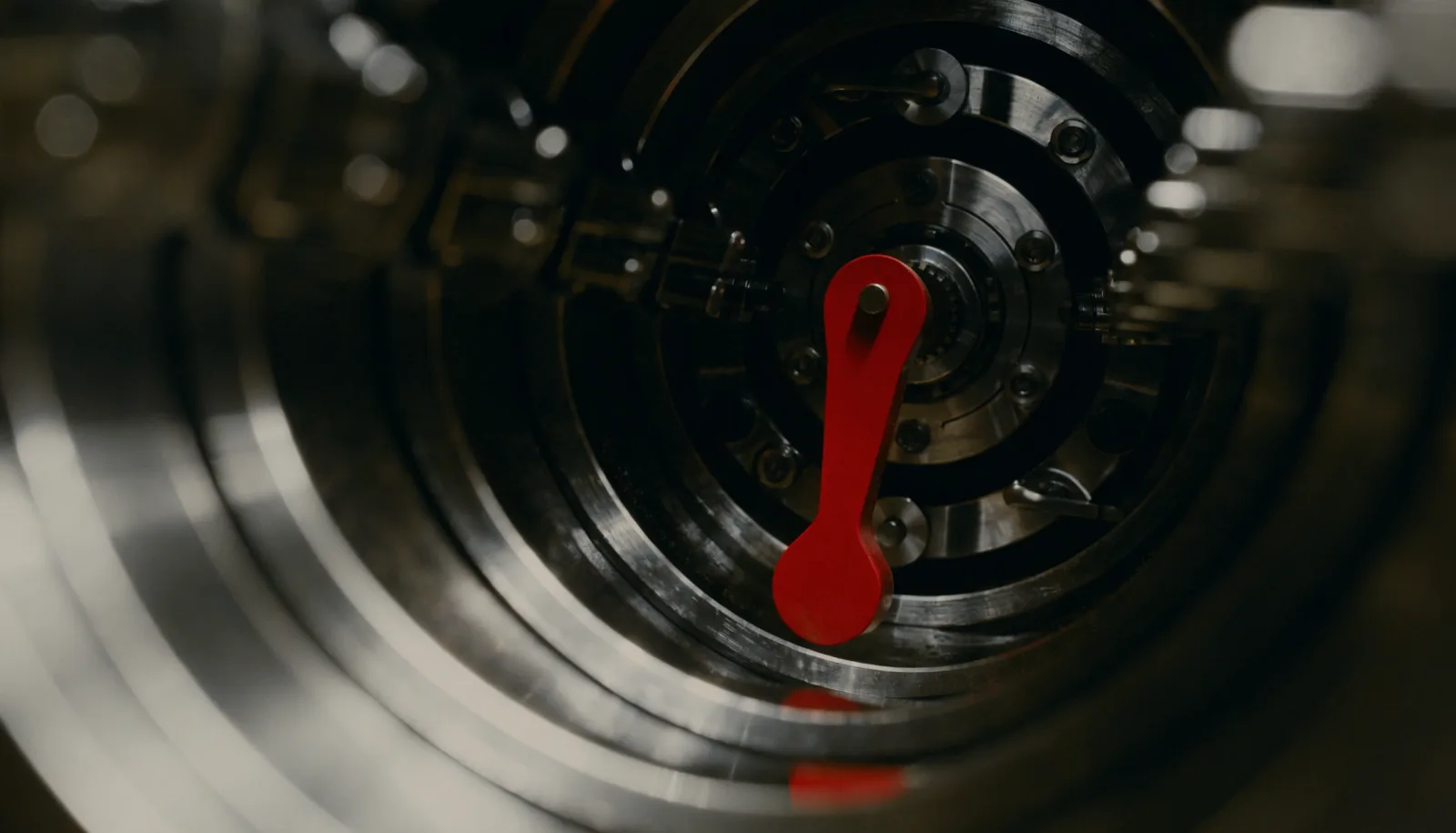
An 800-ton punch press. A master operator with 32 years at this machine, three months from retirement. Whenever the pitch changed or the metal shavings curled wrong, he'd reach over and touch the die. One touch told him the temperature was off. He'd call for a shutdown. The plant manager was nervous: none of this lived anywhere in the SOP. We asked him: 'How do you know when to stop?' He thought for a long moment. 'I just… feel it's wrong.'
This is manufacturing, logistics, and automotive's most valuable asset, and easiest to lose. The knowledge exists nowhere in writing. It lives in tactile sensitivity, in listening, in years of handling exceptions. What we're discussing isn't chatbot development. It's taking a judgment that's always right but can't be explained, and making it searchable and actionable, something the next person can pull up on the floor when they need it.
Why traditional knowledge transfer fails
Most plants handle succession the same way: record training videos, write an operations manual. We've seen plenty of these, 300-video libraries, each 40 minutes long, sitting in a shared drive, unwatched and unreachable when a machine fails at 2 a.m. The other approach is apprenticeship: five to eight years of shadowing before someone can run the line independently. Trouble is, the master leaves next year.
The problem is how the knowledge is structured. Expert judgment is triggered by conditions: you see sign B in situation A, you execute action C. A manual is linear. The shop floor is random. You're not flipping through a chapter at 3 a.m. when the alarm screams. You need an answer to: 'Have I seen this exact acoustic signature plus this current waveform before? What did we do?' A traditional document can't answer that.
The three-step knowledge transfer process
Here's how this works in practice.
First: extract the tacit knowledge. Asking directly doesn't work, the master can't articulate it. Instead, use situation reconstruction: pull the anomaly tickets, downtime logs, and repair notes from the past two years, then walk through each one with the master: 'What were you thinking in this case?' Concrete cases trigger real memory. A veteran logistics dispatcher originally said 'scheduling is just experience.' But when we showed him 30 reassignment records, he articulated this: 'Route three during rain plus this customer, I always deploy 40 minutes early.' That's a learnable rule. Three weeks of structured interviews with six veterans yielded roughly 400 discrete judgments like that.
Second: make it searchable, not a PDF library. This is where retrieval-augmented generation works: assemble work orders, blueprints, repair logs, expert commentary, sensor telemetry, everything into a natural-language searchable knowledge base. When a technician asks 'spindle temperature spike on CNC line three with low-frequency vibration underneath,' they don't get an article. They get the seven previous identical cases, what was done each time, why that particular expert chose that path. Every answer traces back to the original work order.
Third: integrate it into existing workflows, not another website to log into. This step determines whether the system gets used. If a tech has to walk off the line, fire up a browser, and punch in credentials just to ask a question, they won't do it. Plug the system into the tablet interface they already use for shift reports, or into the maintenance work order system they live in. When an alarm fires, relevant historical context surfaces automatically. Looking something up goes from 'extra task' to 'there it is, I already saw it.'
What we learned
Our first version failed the same way. We thought: load the data, the model answers, we're done. It shipped with single-digit usage rates. The problem: answers had no source trail, so veteran technicians didn't trust them, they'd call a colleague instead. And the knowledge couldn't evolve. The expertise the master passed on his last day became outdated six months later when new dies arrived or new customers demanded different protocols.
We fixed it by adding two things: every answer includes a link to the original case so people can verify for themselves, and floor staff can flag a wrong answer with one click, with corrections flowing straight back into the knowledge base. Within three months, the same system at an automotive parts supplier went from 7% usage to over 50%. Brand-new technicians cut their time to independently handle a common fault from an average of 40 minutes to 12 minutes.
| Traditional Knowledge Transfer | Knowledge Transfer AI System |
|---|---|
| Training videos sit in shared drives, unreachable during faults | Alarm triggers, relevant historical context auto-surfaces |
| A technician needs 5-8 years to become independent | New hires independently handle routine faults within 3 months |
| Master leaves, knowledge goes with them | Judgments are structured and retained, continuously updated |
| Manuals are sequential; they can't answer random shop-floor questions | Natural-language search returns answers you can trace to source |
Choosing what to digitize
Not every piece of knowledge deserves the effort. Prioritize high-frequency decisions with high consequences, press shutdown timing, cold-chain temperature exceptions, early detection of line noise. Edge cases that happen once a year do not justify the work; leave them where they are. Choosing the right scope matters more than the technology itself.
Be honest about the limits. AI can't extract knowledge workers don't consciously possess. Contextual interviews always have blind spots. Position this system as 'preserve the 80 percent you can articulate, and keep pushing toward the remaining 20', not as a perfect copy of a person.
We don't do these projects and hand off a report. Our engineers stay on-site until field technicians are using the system, until problem resolution times are dropping. A nod in the demo room doesn't count. Success is a veteran technician trusting its answer at 3 a.m. in the middle of a crisis.
Summarize this page with AI
Related posts

Start with one workflow.
Agree on the next step.
Leave your contact details and question type. We will follow up by email to understand the work and discuss scope.