Claude Fable 5.2 cuts standard API prices 20% and generates output up to 30% faster
Claude Fable 5.2 fast mode costs $16/$80 per million tokens. Opus 5.5 remains the starting point for most coding and knowledge work.
By
Tenten AI Delivery Team
Industry Delivery
Published
Read time
8 min
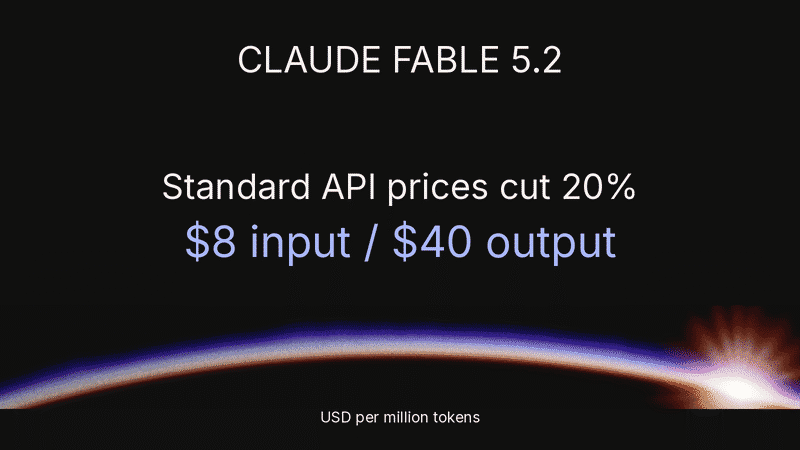
Claude Fable 5.2 launched on November 9, 2026, with standard API rates of $8 per million input tokens and $40 per million output tokens, a 20% cut from Fable 5.1. Anthropic says the new model generates output tokens up to 30% faster than its predecessor and offers an optional fast mode at a higher price.
The launch gives teams a cheaper route to Anthropic's most demanding technical work. It also comes with a striking demonstration: more than 1,000 agents spent eight days building a bootable operating system prototype. But the company's launch announcement still recommends Opus 5.5 as the starting point for most coding and knowledge tasks.
Fast mode doubles the token price
Claude Fable 5.2 costs twice as much per standard input and output token as Opus 5.5. Its price cut is relative to Fable 5.1, as the current Claude API pricing makes clear. All rates below are USD per million tokens through the direct Claude API.
| Model and mode | Input | Output |
|---|---|---|
| Fable 5.1 standard | $10 | $50 |
| Fable 5.2 standard | $8 | $40 |
| Fable 5.2 fast | $16 | $80 |
| Opus 5.5 standard | $4 | $20 |
Standard cache reads also fall 20%, from $0.25 to $0.20 per million tokens. Fast mode offers output token generation up to 2.5 times faster, at double Fable 5.2's standard input and output rates. Neither that figure nor the standard model's 30% improvement measures how long an entire job takes. Research, tool calls and retries still add time.
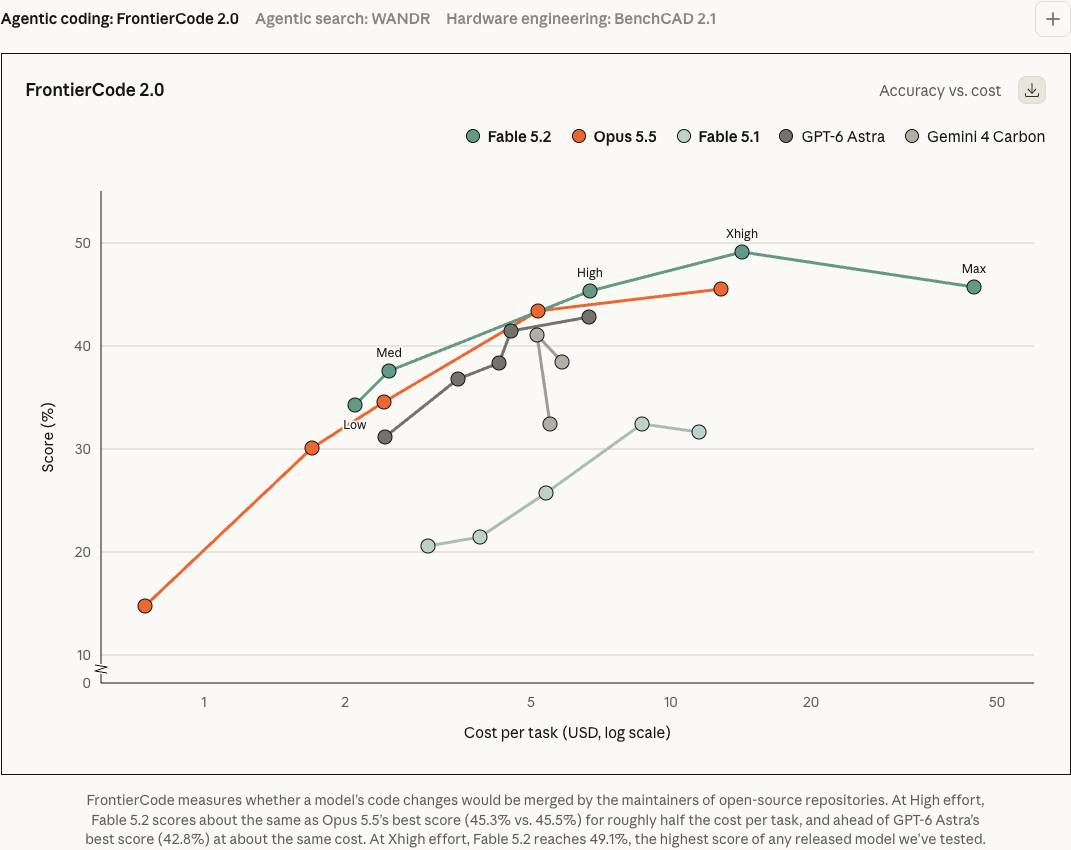
Cost per completed task can tell a different story from token prices. In Anthropic's early FrontierCode 2.0 testing, Fable 5.2 at High effort scored 45.3%, close to Opus 5.5's best score of 45.5%, for roughly half the cost per task. That result belongs to a specific benchmark and effort comparison.
Independent testing shows how widely the bill can vary within Fable itself. Artificial Analysis's release evaluation lists weighted average costs of $3.10 per Intelligence Index task at Low effort and $26.54 at Max, both with default fallback. Those are benchmark averages, but the range makes the purchasing question clear: how much does a completed job cost at the setting the team actually needs?
A bootable OS prototype is the showcase, while Opus remains the recommended starting point
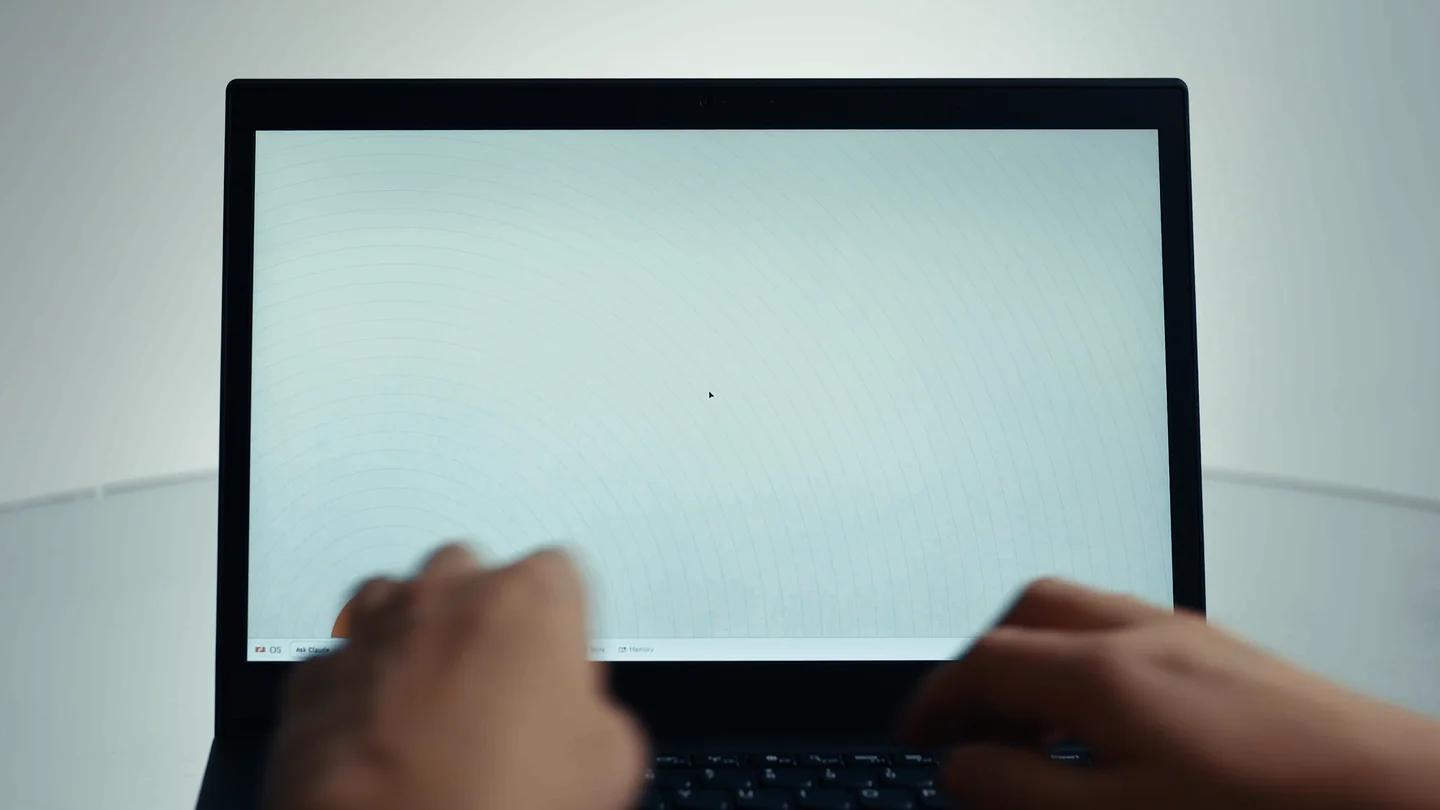
Anthropic's operating system experiment began with an empty folder. Fable 5.2 coordinated more than 1,000 subagents over eight days of coding, testing and review. According to the company, the resulting prototype boots on a laptop and includes a core, disk and network drivers, persistent storage, windows and an installer. A working prototype is a concrete result; readiness for everyday use would require separate evidence.
The company also reports that agents using an early Fable 5.2 migrated a critical production service from Python to Rust, making that service start about 26 times faster. These demonstrations point to the product's intended role: sustained work on difficult projects where repeated attempts or human coordination can be expensive.
Anthropic still advises starting with Opus 5.5 for most coding and knowledge work, then moving up for harder, more open-ended problems. Fable can also advise a smaller model or orchestrate work delegated to cheaper models. For a team already completing routine tasks with Opus, the launch supplies no blanket cost argument for replacing it.
Enterprise access includes a retention condition
Claude Fable 5.2 and Mythos 5.2 share the same underlying model, with different safeguards and access requirements. Fable has stronger cybersecurity and biology restrictions. Organizations seeking Mythos for beneficial security or biomedical research must apply through the relevant verification program.
Fable 5.2 is available through the Claude Platform and major cloud platforms. Its model specifications list a one-million-token context window, a maximum output of 128K tokens and the API identifier claude-fable-5-2.
The model requires 30-day data retention unless Anthropic expressly authorizes zero data retention. The launch announcement says eligible enterprise customers can continue using zero data retention before implementing Enterprise Frontier Safeguards. That private beta runs automated safety monitoring on prompts and responses stored in the customer's infrastructure.
Fable 5.2's strongest purchasing case is work that was previously too difficult, slow or costly to finish. Routine tasks can stay with Opus while teams compare completed-task costs for harder jobs. Where 30-day retention is unacceptable, explicit zero-retention authorization is a prerequisite for adoption.
Sources
Summarize this page with AI
Related posts

Start with one workflow.
Agree on the next step.
Leave your contact details and question type. We will follow up by email to understand the work and discuss scope.